


The Silent Battle: Why Kindness is the Ultimate Command of Modern Leadership

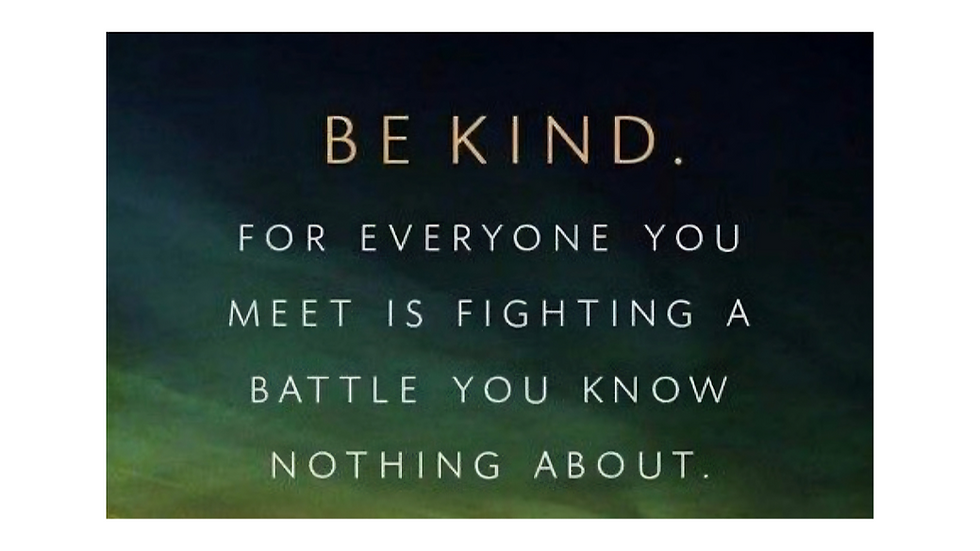
In our pursuit of professional excellence, we frequently overlook the most fundamental element of any organization, a hidden dimension to leadership that doesn’t appear on a balance sheet, yet dictates the success of every organization on earth: the human heart.
Even in the age of AI, the soul of a world-class organization remains human. The most profound strategy a leader can adopt is simple: Be kind because everyone you lead is fighting a battle you know nothing about. In a world that often feels increasingly cold and transactional, this isn't just a sentimental quote to hang on an office wall. It is a strategic imperative. When we trade 'command and control' for 'care and connect,' we stop seeing employees as resources and start seeing them as the heartbeat of our success. Kindness is the bridge to a new era of leadership.
The Invisible Weight
Think about the person sitting in the cubicle across from you, or the voice on the other end of the Zoom call. On the surface, they may appear professional, composed, and ready to work. But behind that professional veneer, they might be navigating a world of silent struggle.
Perhaps they are caring for an aging parent with failing health. Maybe they are struggling to keep their marriage from falling apart, a single parent fighting to keep their home together, or facing a financial crisis they are too proud to mention. For some, the battle is internal—a quiet, exhausting fight against anxiety, depression, or the feeling that they are never "enough."
When a leader lacks kindness, they operate through a narrow lens of "output." To them, a missed deadline or a distracted tone is simply a performance gap to be corrected or a metric to be managed. But a truly inspirational leader sees the human being behind the screen.
They recognize that a sudden dip in productivity isn't necessarily a lapse in discipline; it is often the silent signal of someone carrying an invisible weight. Instead of leading with judgment, they lead with inquiry—understanding that behind every "performance issue" is a person longing for support and a safe place to land. When we trade the pressure of the deadline for the power of presence, we don't just fix a problem; we restore a person.
Kindness is Not Weakness
One of the greatest myths in traditional management is that kindness is synonymous with weakness. We’ve been conditioned to believe that "nice" leaders get walked over, while "tough" leaders get results.
This couldn't be further from the truth. In fact, kindness is the highest form of strength. It takes zero effort to be reactive, impatient, or demanding. It takes immense emotional intelligence and self-regulation to be kind when the pressure is high and the stakes are even higher.
Kindness in leadership doesn't mean avoiding hard conversations or lowering standards. It means having those conversations with dignity. It means holding people accountable without stripping away their self-worth. It means recognizing that the person you are leading is more than just a resource; they are a life.
When you lead with kindness, you create Psychological Safety. This is the foundation of every high-performing team. When people know that their leader cares about them as a person, they don’t just work harder; they work differently. They take risks. They share innovative ideas. They admit to mistakes early because they aren't afraid of being shamed.
Kindness is the soil in which trust grows, and trust is the only currency that truly matters in a professional community.
The Science of the Kind Leader
We now know, through decades of organizational psychology, that a manager has a greater impact on an employee’s health than their primary care doctor. A toxic leader triggers a physiological stress response—releasing cortisol, increasing heart rate, and suppressing the immune system. Over time, a lack of kindness from a leader literally makes people sick.
Conversely, a kind leader acts as a healer. When an employee feels seen, heard, and supported, their body releases oxytocin and dopamine. They feel a sense of belonging and security. This isn't just "fluff"—it is biology. A healthy, happy employee is a creative and productive employee. By being kind, you aren't just being a "good person"; you are optimizing your team's ability to function at their highest level.
The "Reverse Mentorship" of Hardship
Many of us have learned this lesson the hard way. We’ve all worked for that one leader who inspired us to be nothing like them. We remember the feeling of being "just a number" or being blamed publicly for a collective failure. Those experiences are painful, but they are also our greatest teachers.
This is what I call "Reverse Mentorship." We explore this at length in my previous article. Those negative experiences show us the "negative space" of leadership. They highlight exactly what is missing in the world. When you’ve survived a leader who lacked kindness, you gain a visceral understanding of why kindness is so vital. You realize that your mission as a leader is to be the person you once wished you had in your corner.
How to Lead with Kindness Daily
Leading with kindness isn't about grand gestures; it’s about the small, consistent actions that build a culture of care:
Listen to Understand, Not to Reply: When an employee comes to you, put your phone down. Give them your full presence. Often, the "battle" they are fighting just needs a witness.
Validate Before You Correct: If someone makes a mistake, acknowledge their effort first. Address the human before you address the error.
Assume Positive Intent: When someone falls short, don't jump to the conclusion that they are lazy or incompetent. Ask yourself: "What could be happening in their life that I don't know about?"
Practice Radical Empathy: Put yourself in their shoes. If you were going through what they might be going through, how would you want to be treated?
A Better Standard for Leadership
The world is loud, fast, and often harsh. People are tired. They are fighting battles with their mental health, their families, and their futures. As leaders, we have a choice. We can be another source of stress in their lives, or we can be a sanctuary of kindness.
When you choose kindness, you are choosing to be a leader for the new era. You are building a legacy that won't be only measured in profit margins, but in the lives you’ve touched and the people you’ve helped rise. You are proving that you can be a world-class achiever and a world-class human being at the same time.
Your brilliance should never be a threat; it should be a light. And that light is brightest when it shines on others, especially when they are in their darkest moments.
Keep shining. Keep leading. And above all, keep being kind.
The Blueprint for Your Transformation
Leadership isn't a destination; it's a practice. If you are ready to move beyond "command and control" and become the architect of inspiration your team deserves, I invite you to dive deeper into these principles.

My Amazon Bestseller, "The Blueprint of Leadership: Strategies For A New Era," was written for the leader who knows that empathy, trust, and kindness are the real keys to sustainable success.
Don't just change your own approach—change your entire organization’s culture. Order copies for your entire team today. Give them the tools to lead each other with the same heart and integrity that you bring to the table. Let's build a future where we don't just hit targets; we lift each other up.
Invest in your team’s growth. Order on Amazon today: https://geni.us/s2nooOD


From the beginning, I felt the kind of energy that tends to draw attention in digital environments, and https://predictionsunited.com/ appeared as one point within that observation. The goal was not to focus on the platform itself, but to notice how my concentration changed with different rhythms and visual arrangements. At times the focus felt deep and continuous, while at other moments it shifted quietly, like following a sports match that requires attention to details and statistics. This observation helped me understand my natural patterns of attention and how small details can influence mental clarity. In the end, the experience turned into a form of self-awareness, allowing me to consciously adjust my focus and maintain balance even during busy days filled with…
This post captures the essence of what it means to lead in the 21st century; realizing that every person on your team is likely fighting a battle you know nothing about is a game-changer for organizational culture. As a student trying to balance full-time work and advanced technical studies, I’ve felt this "silent battle" firsthand when my personal life and academic deadlines collide. I recently reached a breaking point trying to manage a complex systems design project, and it was only after I reached out for uml diagram assignment help that I finally had the mental bandwidth to show up effectively in my professional role. When leaders lead with kindness and recognize the humanity behind the output, it doesn't just improve…