


Reverse Mentorship: My Best Leadership Teacher Was My Worst Boss

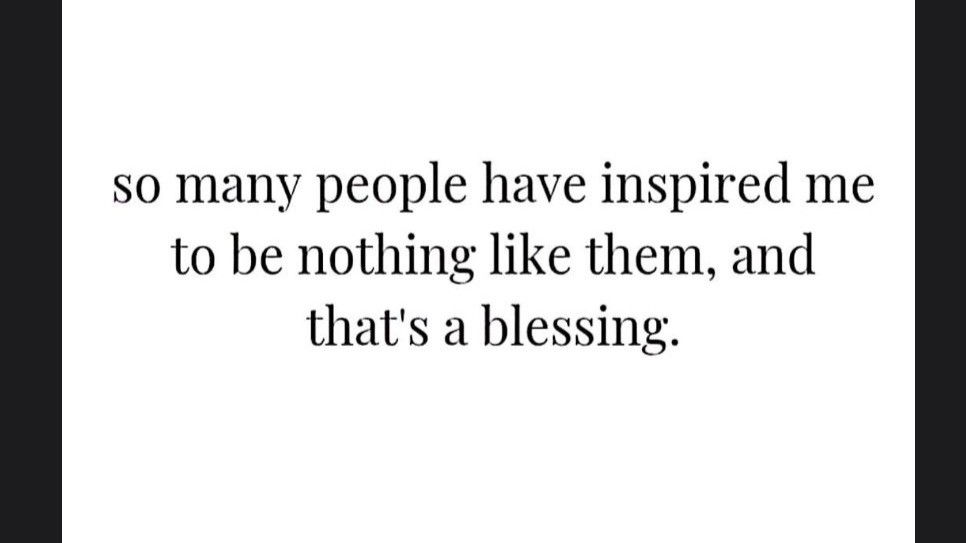
We’re taught to find mentors who inspire us. But some of my most profound leadership lessons didn't come from a role model—they came from a nightmare.
We are instructed to seek out the icons, the titans of industry, and the charismatic visionaries whose footsteps we can follow and rightly so. We should look for the "North Stars" of leadership.
But there is another kind of teacher—one that is often more profound, more visceral, and more permanent in our memory. These are the leaders who taught us exactly who we don't want to be.
They are the micromanagers who stifled our creativity. They are the bosses who took credit for our late nights and early mornings. They are the executives who prioritized a decimal point on a balance sheet over the dignity of a human being. People often ask why I champion inspiration, empathy, trust and integrity as the non-negotiables of leadership. My answer is a hard-won truth: I have been inspired by many 'leaders' to be absolutely nothing like them. I have sat in rooms where I was belittled until my confidence was stripped away, witnessing firsthand how shouting was mistaken for strength and fear rebranded as 'accountability.'
Sometimes, when you're in a dark place, you think you've been buried, but you've actually been planted. - Christine Caine
But today we are reclaiming the narrative. We aren't dwelling on those scars; we are using them as a blueprint. Those experiences taught me that leadership isn't about power—it's about people. It is the sacred work of mentoring, guiding, and coaching others to become the best versions of themselves. I lead this way because I know exactly what happens to the human soul when the opposite occurs.
The Power of "Reverse Mentorship"
We typically define mentorship as a positive inheritance—a transfer of wisdom from one generation to the next. But there is another, perhaps more enduring, form of growth: Reverse Mentorship. This is the conscious act of observing toxic behavior and using it as a blueprint for what not to do.
When you work with a leader who governs by fear and manipulation, you aren't just enduring a difficult chapter; you are witnessing a masterclass in organizational decay. Here is how these negative experiences serve as a powerful forge for your own character:
1. The Calibration of Your Moral Compass
Toxic behavior—whether it’s micromanagement or credit-stealing—often triggers a visceral, "gut" reaction. This discomfort isn't just stress; it’s a signal. It serves as a compass, highlighting your non-negotiables. By rejecting these behaviors, you define your ethical boundaries with a sharpness that a positive environment could never provide.
2. The Practice of Radical Intentionality
Toxic cultures are contagious, often pressuring people to mirror bad behavior to survive. Choosing Reverse Mentorship breaks this cycle. It transforms you from a passive observer into an intentional agent of change. Every time you witness a toxic interaction, you face a defining choice: Do I mirror this to get ahead, or do I act with integrity? Choosing integrity in the face of toxicity is how "moral muscle" is built.
3. Empathy Through the Lens of Contrast
There is no better teacher of empathy than the experience of being undervalued. Observing the wreckage of a fear-based culture—low morale, high turnover, and silenced voices—helps you understand the profound necessity of psychological safety. You learn to lead with empathy, not because it’s a "soft skill," but because you have seen the hard consequences of its absence.
4. Survival-Based Emotional Intelligence
Toxic environments often demand a high level of EQ just to navigate the day. By analyzing why a manager is failing to motivate or why a team is fractured, you develop a sophisticated understanding of human dynamics. You aren't just avoiding bad behavior; you are decoding the mechanics of human motivation.
Examples of "Reverse Mentorship" in Action:
The Screamer: If a "leader" yells to get their way, you make a conscious commitment to remain calm, firm, and respectful under pressure.
The Credit-Stealer: If a colleague takes credit for a team project, you make a conscious commitment to magnify the contributions of others.
The Gossip: If your manager gossips about colleagues, you make a conscious commitment to foster trust and direct communication.
When you work for someone who uses fear-based tactics to get the work done, you aren't just suffering; you are witnessing, in real time, the erosion of loyalty, the death of innovation, and the birth of a "quiet quitting" mindset. The pain you feel in those environments is a signal. It is your leadership compass calibrating itself. It’s in this moment you say to yourself: "When I am in that position, I will never make someone feel the way I feel right now."
Reverse Mentorship Stories
Many of us carry 'reverse mentorship' stories—experiences with leaders who inspired us to be their exact opposite. Let’s look at three common archetypes and examine how these negative experiences ultimately help the people involved become the inspirational leaders they are today.
1. The Credit-Taker vs. The Spotlight-Shifter
James worked for an executive who was notorious for "upward management." In meetings with the board, this executive would present James’s complex data models as his own. He would use words like "I discovered" and "My analysis showed," while James sat silently at the back of the room.
James felt invisible. He felt like a tool rather than a teammate.
The Transformation: Today, James is a Senior VP. Because of that experience, he has a "Rule of Recognition." In every high-level meeting, he brings his junior team members and insists they present their own work. He publicly credits his team for every win. He realized that a leader’s job isn't to shine; it’s to be the mirror that reflects the team's brilliance.
2. The Micromanager vs. The Empowerer
Sarah once worked for a manager who required her to CC him on every single email—even internal ones to her direct peers. He would "tweak" her wording, change her fonts, and demand hourly status updates. Sarah felt her confidence withering. She stopped taking initiative because she knew it would just be overridden.
The Transformation: Sarah eventually left to start her own consultancy. Her leadership style is the polar opposite. She practices "Intent-Based Leadership." She gives her team the "What" and the "Why," and then she steps back and lets them figure out the "How." She realized that micromanagement is just a lack of confidence disguised as a quest for quality.
3. The "Profit-at-all-Cost" Executive vs. The Human-Centric Leader
Robert was part of a company that went through a massive layoff. The CEO announced the news via a cold, pre-recorded three-minute video. People who had been with the company for twenty years were locked out of their laptops before the video even ended. There was no empathy, no gratitude, and no human touch.
The Transformation: Robert was devastated, but he used that hurt as fuel. When he eventually rose to a leadership position in a different firm, he focused on building "Trust Capital." He realized that the "bottom line" is actually a byproduct of how you treat your people. He became a leader who walks the floor, knows his employees' names, and understands that business is, and always will be, a human endeavor.
With the abundance of real-world information on the devastating effects of toxic leaders and culture in many organizations, one must ask how it is that toxic leaders continue to persist, and if these behaviors are so damaging, why do we still see them in the "New Era" of work?
Why Toxic Leadership Persists
We talk about psychological safety, empathy, and "soft skills" more than ever before. Yet, a glaring paradox remains: Toxic leaders aren't just surviving; in many organizations, they are being promoted.
The devastating effects of a fractured culture are no longer a secret—they are documented liabilities. So, why does the modern workplace still struggle to exorcise these damaging behaviors? To fix the culture, we have to look past the individual and start questioning the underlying mechanics that allow them to endure.
Here are the three primary engines driving the toxic paradox:
1. The Trap of Short-Termism
Toxic leadership can often produce an immediate, seductive spike in productivity through sheer pressure and intimidation. But this is a hollow victory.
The Reality: It’s like burning your furniture to keep the house warm. Eventually, you run out of furniture, and the house is still cold. You cannot sustain a business on the ashes of your employees' well-being.
2. The "Cycle of Meritocracy" Myth
Many leaders lead the way they were led. This creates a "Cycle of Abuse" masked as "Toughness." They tell themselves, "My boss was hard on me and I turned out fine," effectively mistaking professional trauma for a badge of honor. When we confuse "toughness" with "toxicity," we pass down a broken inheritance to the next generation of managers.
3. The Insecurity Engine
At its core, most toxic behavior is a frantic defense mechanism. A leader who is terrified of losing their status or being "found out" will instinctively:
Hoard information to remain indispensable.
Take credit to bolster their perceived value.
Suppress talent to eliminate internal competition.
If we want to build a more human, transformative way to lead, we have to stop treating toxic leadership as an isolated "bad apple" problem. We must look at the soil—the systems and metrics that reward short-term gains over long-term stability.
It’s time to shift the perspective. We shouldn't just be identifying bad leaders; we should be building a blueprint for a culture where toxic mechanics simply have no room to breathe.
How to Use Negative Inspiration to Fuel Your Growth
If you are currently working for someone who is "inspiring you to be nothing like them," here is how you can turn that frustration into a professional advantage:
1. Keep a Reverse Leadership Journal.
When something happens that makes you feel devalued, frustrated, or stifled, write it down.
The Event: What did the leader do?
The Feeling: How did it impact your motivation and morale?
The Vow: How will you handle this situation differently when you are the leader? This turns your pain into a structured learning curriculum.
2. Focus on Your Lateral Leadership.
You don't need a title to lead. If your boss is toxic, become the leader for your peers. Be the one who offers the encouragement they aren't getting from the top. Practice your human-centric skills now with the people around you. You are building the muscle for your future role.
3. Protect Your Inner Narrative.
Toxic leaders will try to make you believe that you are the problem. They will tell you that you’re "too sensitive" or "not cut out for this." Do not let their dysfunction become your identity. Remind yourself that you are observing a failing system, not a failing self.
4. Identify the Exit.
Growth lives on the other side of your comfort zone, but it does not live in a toxic environment. If you have learned the lessons that this "un-inspirational" leader has to offer, don't stay until you burn out. Use that negative inspiration to fuel your search for a culture that deserves you.
The New Era of Leadership: A Call to Action
The "Old Era" of leadership—command-and-control, fear-based motivation, and transactional relationships—is dying. But it hasn't disappeared yet. It's being replaced by a "New Era" where empathy is a superpower, trust is the primary currency, and the greatest metric of success is the impact you have on other people's lives.
We have a choice. We can repeat the mistakes of the people who frustrated us, or we can be the "circuit breakers" who stop the cycle of toxic leadership.
We can be the leaders we wish we had.
Every time you choose kindness over ego, every time you give credit where it’s due, and every time you lead with a heart for people, you are proving that the un-inspirational leaders of your past didn't break you—they built you.
The choice is yours. Will you be a reflection of the leaders who hurt you, or a response to them?
Now let's hear from you. Leadership is often forged in the fires of bad experiences. I’m curious—who was the leader who became your greatest 'reverse mentor' by showing you exactly what not to do? What is the #1 lesson you learned that you now use to inspire your own team? Let’s share our stories and, together, redefine what it means to lead with heart, trust, and purpose."

P.S. If you enjoyed today’s insights on Reverse Mentorship, you’ll love the deeper strategies in my latest book, The Blueprint of Leadership. You can grab it here: 🔗 https://geni.us/s2nooOD


The concept of reverse mentorship is such a powerful tool, especially when we realize that even the most difficult professional experiences can serve as our greatest teachers. It’s often that "worst boss" who inadvertently shows us exactly the kind of leader we don't want to be, highlighting the importance of empathy and open communication. As a student currently navigating a heavy academic load, I’ve felt that same pressure of trying to meet high expectations while managing my own growth; in fact, the stress of balancing my leadership coursework with complex projects recently led me to seek out humanities assignment help online just to ensure I could keep up without losing my perspective. This post is a fantastic reminder that learning is…
I came across a discussion about burnout in a productivity forum, and someone mentioned how stress can affect hormones more than we think. In their reply, they included https://ways2well.com/blog/testosterone-and-stress-what-you-can-do, so I opened it. What caught my attention was how it explained the connection between chronic stress and recovery issues. The part about sleep being affected really resonated with me. It felt realistic and easy to follow, and I finished it with a better understanding of how these things might be connected.